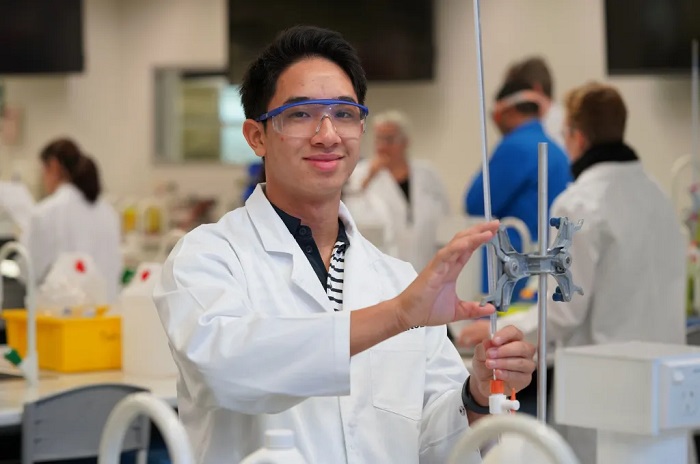
Education, often hailed as the key to unlocking opportunities and potential, holds a transformative power that reaches far beyond the confines of the classroom. It is the bedrock upon which individuals build their futures and societies shape their values, progress, and prosperity. In a world that is constantly evolving, education continues to play an essential role in fostering personal development, advancing innovation, and addressing the challenges of an increasingly complex global landscape. From the basics of literacy to the complexities of higher learning, education serves not only as a pathway to economic stability but also as a tool for social change and cultural enrichment. In this article, we explore the many facets of education, its far-reaching impact, and the evolving role it plays in modern society.
The Foundation of Knowledge: Formal Education Systems
At the core of every society is its formal education system. These systems—ranging from primary and secondary schooling to universities and technical institutions—are designed to provide individuals with the fundamental skills and knowledge necessary to succeed in life and contribute to the common good. They are the engines of intellectual development, offering structured curricula that cover everything from language arts and mathematics to science and the humanities.
In primary and secondary education, the goal is not only to impart factual knowledge but also to cultivate critical thinking skills, creativity, and problem-solving abilities. A strong foundation in subjects like reading, writing, and arithmetic enables students to comprehend and analyze information, which are key skills in almost every aspect of life. However, education at this level is also about nurturing curiosity, encouraging exploration, and laying the groundwork for lifelong learning.
The transition to higher education, whether in the form of universities, colleges, or vocational training centers, marks a critical phase in an individual’s journey. Higher education provides more specialized knowledge and the opportunity to hone expertise in specific fields. It is in these environments that individuals can engage deeply with their chosen discipline, conducting research, pursuing passions, and developing professional competencies. Whether it’s in the sciences, the arts, or business, higher education provides the intellectual tools and academic rigor that allow students to thrive in increasingly competitive and complex industries.
Moreover, the importance of vocational education and technical training cannot be overstated. As technology evolves and industries become more specialized, vocational programs offer valuable alternatives to traditional university routes, preparing students for a wide range of careers that require specific skills, from engineering and healthcare to hospitality and information technology. These programs not only support economic growth by providing a skilled workforce but also offer individuals meaningful, well-compensated career opportunities.
The Social and Cultural Dimensions of Education
While the academic and vocational aspects of education are crucial, its role in shaping society and culture is just as important. Education is one of the most powerful tools for fostering social mobility, equality, and cohesion within communities. It has the potential to bridge gaps in socioeconomic status, race, and gender, providing individuals from all walks of life with the opportunity to improve their circumstances and contribute to society.
One of the most significant contributions of education is its ability to promote social inclusion. A quality education empowers marginalized groups—such as women, ethnic minorities, and individuals with disabilities—by providing them with the tools and opportunities to succeed in a world that might otherwise be closed off to them. Education helps to break the cycle of poverty by offering individuals the means to improve their economic standing and access better jobs, healthcare, and living conditions.
Furthermore, education plays a vital role in cultivating civic engagement and democratic values. It is through education that individuals learn about their rights and responsibilities as citizens, as well as the principles of justice, equality, and freedom. In democratic societies, an educated populace is essential for making informed decisions in elections, advocating for policies that promote the common good, and holding governments accountable. By instilling values such as respect for diversity, critical inquiry, and ethical reasoning, education also plays a crucial role in fostering tolerance and reducing prejudice.
On a more personal level, education offers individuals the chance to engage with a wide range of cultures and worldviews, encouraging empathy and understanding. Exposure to different languages, histories, and perspectives broadens one’s horizon and helps to break down cultural barriers. This is particularly important in an era of globalization, where individuals from different parts of the world increasingly interact in both personal and professional spheres. Education, in this sense, becomes a bridge that connects people across continents and helps to foster a more interconnected and compassionate world.
The Role of Technology in Modern Education
In the past few decades, the digital revolution has transformed nearly every aspect of life, and education is no exception. The rise of technology in education has opened new doors for both teaching and learning, creating a more dynamic and accessible educational experience. Digital tools such as online courses, educational apps, and virtual classrooms have made learning more flexible, allowing individuals to pursue education at their own pace, from any location, and often at a lower cost.
Online education has gained tremendous popularity in recent years, particularly with the onset of the COVID-19 pandemic, which forced many schools and universities to adopt virtual learning environments. Virtual platforms like Zoom, Google Classroom, and Coursera have made it possible for students to attend lectures, engage in discussions, and complete assignments remotely. This has democratized education, giving people from all corners of the world access to resources and instructors they may not have been able to reach otherwise.
Moreover, adaptive learning technologies are making education more personalized than ever before. These tools use data to assess a student’s progress and adjust the learning material to fit their individual needs, helping to ensure that each student can learn at their own pace and with the appropriate level of challenge. Artificial intelligence (AI) is also being used to automate administrative tasks, allowing educators to focus more on teaching and less on paperwork.
However, the digital transformation of education comes with its own set of challenges. Access to technology and the internet remains a significant barrier in many parts of the world, particularly in rural and impoverished areas. The digital divide must be addressed if we are to ensure that education remains an equalizer rather than a source of inequality. Governments, educational institutions, and private organizations must work together to bridge this gap and provide equitable access to digital resources for all learners.
Education for the Future: Lifelong Learning and Adaptability
In today’s fast-paced, ever-changing world, the concept of education is no longer confined to the early years of life. The need for lifelong learning has never been more pressing. As the job market evolves and technology continues to reshape industries, the skills required to succeed are constantly changing. Individuals must be prepared to adapt to new roles, learn new tools, and acquire new knowledge throughout their lives.
Lifelong learning is essential for personal and professional growth, ensuring that individuals remain competitive in the workforce and are equipped to handle the challenges of a rapidly changing world. This requires not only access to formal education but also an embrace of informal learning opportunities, such as online courses, workshops, and community programs. In this way, education becomes a continuous, ongoing process rather than a finite achievement.
Moreover, education must place greater emphasis on fostering soft skills, such as critical thinking, creativity, communication, and collaboration. These skills are essential for thriving in an increasingly interconnected and dynamic global economy. The ability to think analytically, solve complex problems, and work effectively in diverse teams is critical in a world where technological advancements and globalization are constantly reshaping the landscape of work.
Conclusion: The Ever-Expanding Horizon of Education
Education is the key to unlocking individual potential and advancing collective progress. It empowers individuals to pursue their dreams, contributes to the betterment of society, and drives innovation and discovery. The evolving landscape of education, shaped by technological advancements and changing societal needs, promises to open even greater doors for future generations.
However, the future of education must be one of inclusivity, accessibility, and adaptability. As we face the challenges of the 21st century—climate change, political instability, and social inequality—it is clear that education will play an even more pivotal role in shaping the solutions to these global crises. By ensuring that education is accessible to all, we can build a more just, equitable, and prosperous world, where every individual has the opportunity to learn, grow, and contribute to the collective good.
Ultimately, the power of education lies not just in the accumulation of knowledge but in its capacity to shape the way we think, act, and interact with the world. It is an enduring force that will continue to guide and transform humanity as we move forward into an uncertain yet hopeful future.